Vehicle Aerodynamics
Low drag, near-zero lift and short nose and tail geometries—developed together for stable, space-efficient operation at 300 km/h.
Speed without sacrificing space nor energy consumption.
At 300 km/h, aerodynamic drag is fundamental to energy performance, while near-zero lift supports stable and robust levitation control. Conventional high-speed rail often reduces drag by stretching the nose and tail, consuming valuable passenger or freight capacity.
AALT researched more than 35 features affecting drag, lift and vehicle length. Each feature was evaluated individually before adjoint optimisation was used to determine the dimensions that best meet all objectives together.
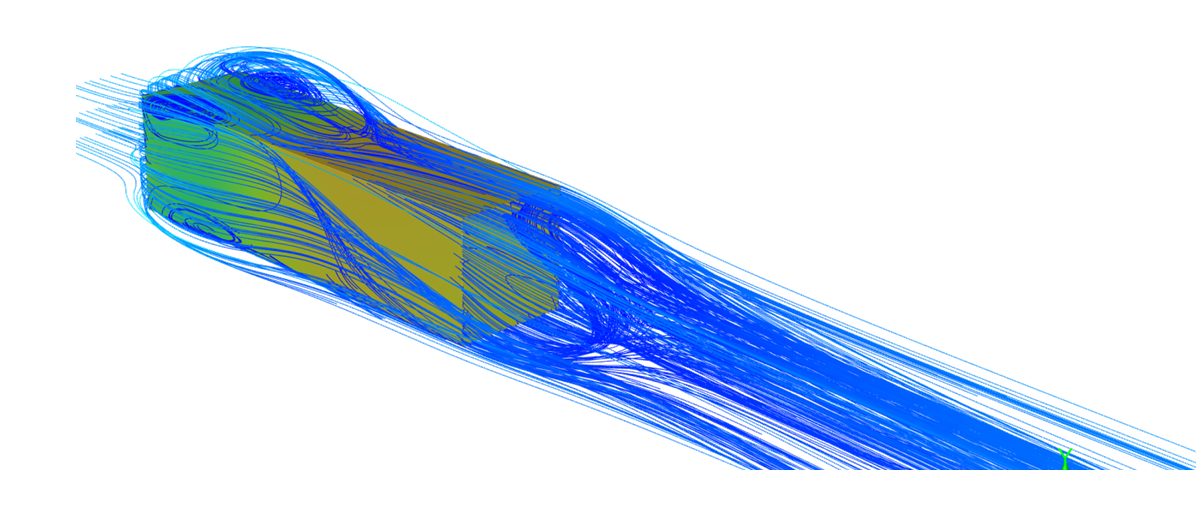
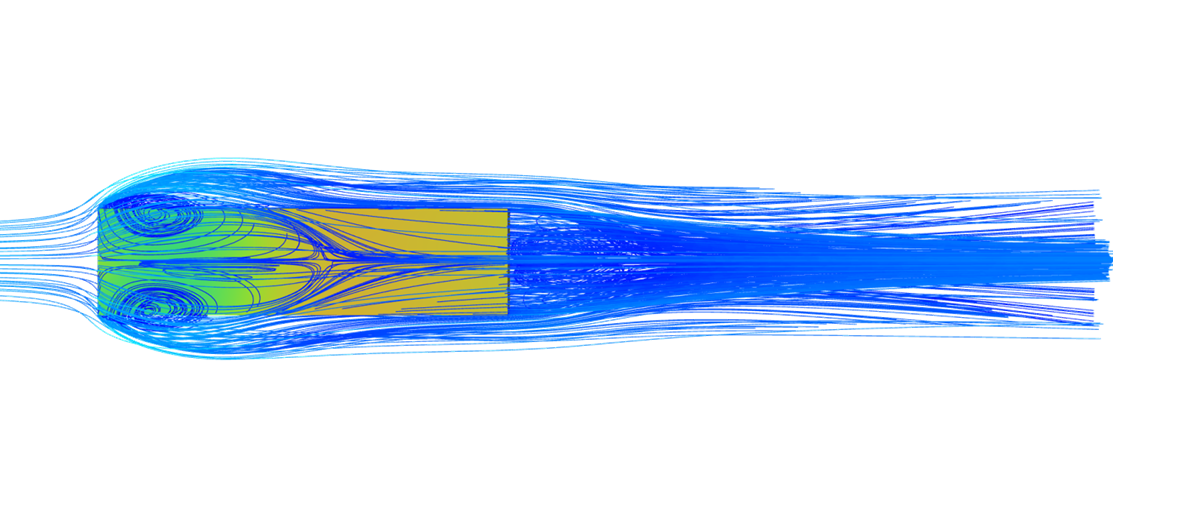
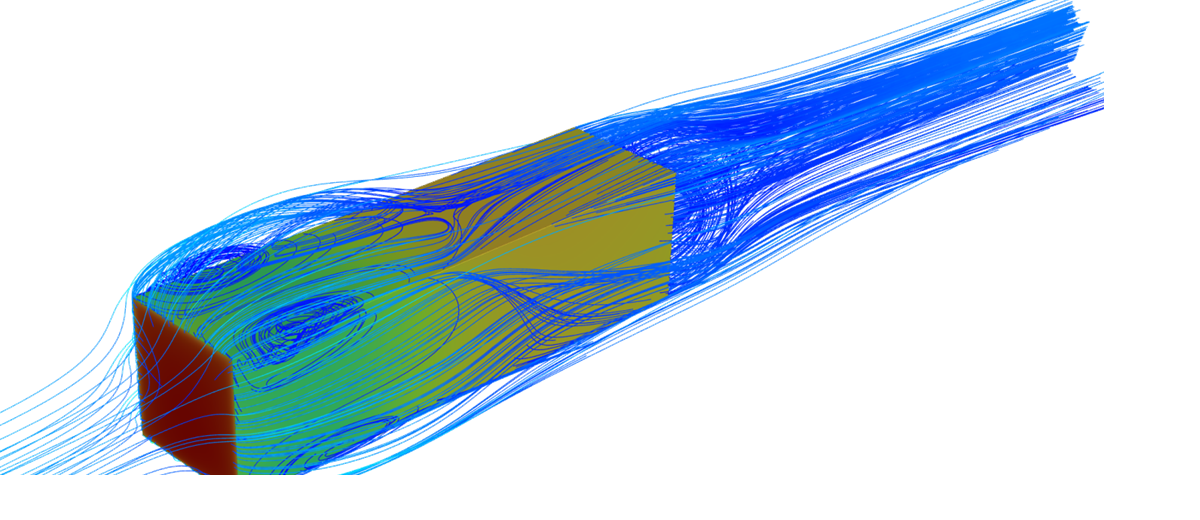
Streamline and wake visualisation, generated in Ansys, reveals acceleration, attachment, separation and recirculation around each candidate geometry. This makes pressure losses visible and guides changes that reduce the wake and aerodynamic drag.
Streamlines, drag and lift progression
Each documented geometry changes all three views and both coefficients together. Drag and lift must be assessed together: the lowest drag value is not automatically the closest to zero lift.